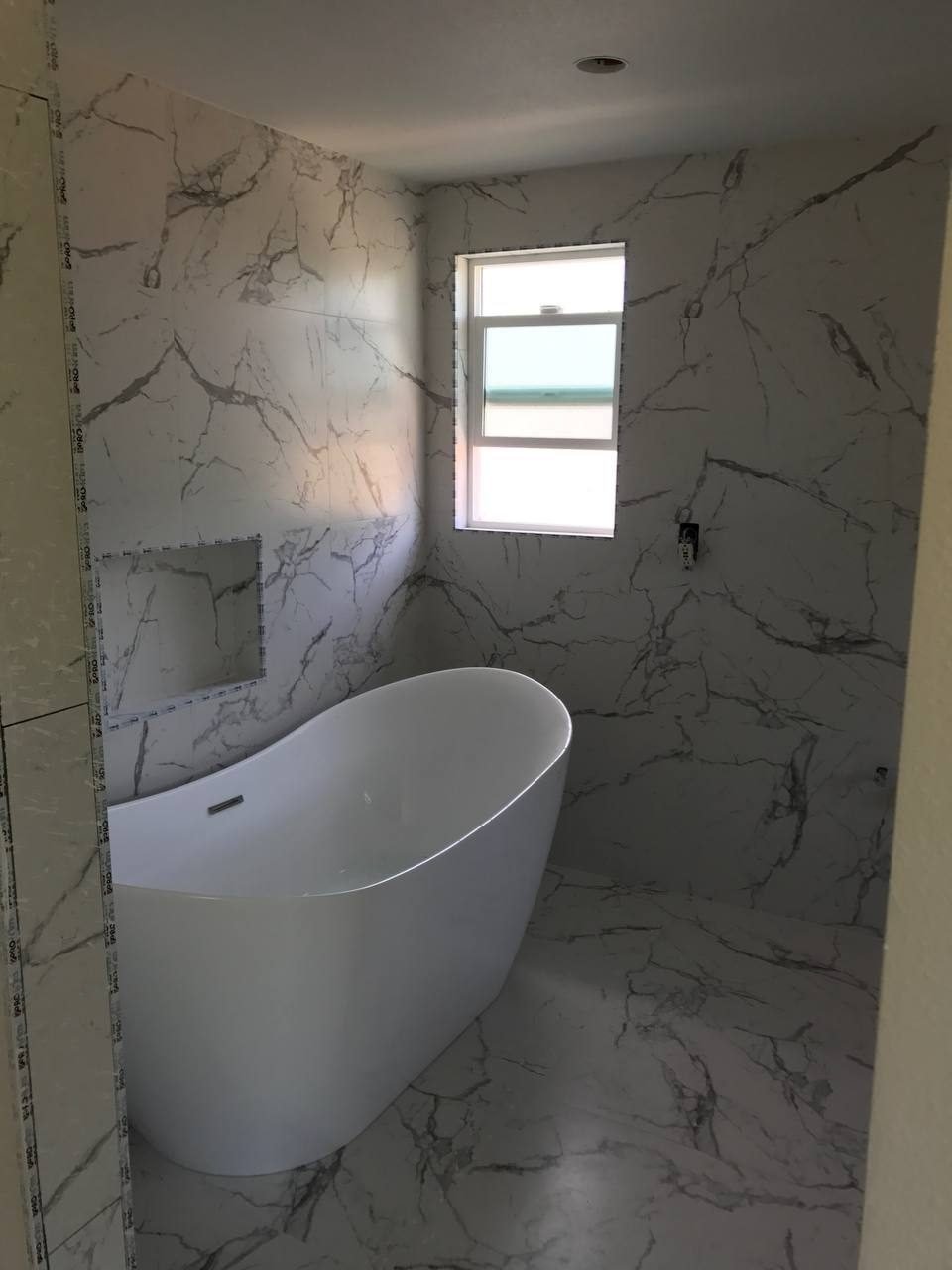
A bathroom remodel is one of the most disruptive projects you can do in a home. You're taking out a fully functional room, stripping it to the studs in some cases, and rebuilding everything from the drain up. It takes real coordination to pull off cleanly.
One of the questions we hear most from homeowners in Arcadia and across the San Gabriel Valley is: How long is this actually going to take? The honest answer depends on scope, permits, material availability, and how many surprises are hiding behind your walls. But here's a realistic week-by-week breakdown for a full bathroom remodel, the kind where you're replacing tile, fixtures, vanity, and possibly moving plumbing.
Scope matters: A cosmetic refresh (new fixtures, paint, mirror) can be done in a few days. A full gut-and-rebuild takes 3 to 5 weeks in most SGV homes. This guide covers the full version.
Before Week 1: Planning and Permits
This phase is invisible but non-negotiable. Before any demo happens, your contractor should be pulling permits if the scope requires them. In Arcadia, any work that involves moving plumbing, electrical, or structural walls requires a permit. That's not bureaucratic busywork, it's protection for you as the homeowner. Unpermitted work can delay a sale, void your homeowner's insurance, and leave you with no recourse if something fails later.
Permits in the SGV typically take 1 to 3 weeks to approve depending on the city and the scope of work. Some cities like Arcadia have online permit portals that move faster. Some don't. Your contractor handles the application, but you should know it's happening and roughly when to expect approval.
This is also when you finalize all your material selections. Tile. Vanity. Fixtures. Mirrors. Shower hardware. If you wait until demo is done to pick tile, you will sit in a gutted bathroom for an extra week waiting for an order to arrive. Order everything before demo starts, or at minimum confirm lead times. Some custom tile ships in 6 to 8 weeks.
Pro tip: Don't let your contractor start demo until your permit is in hand and at least 90% of your materials are confirmed or on order. This single rule prevents most project delays.
Week 1: Demo and Rough-In
What's happening
Demo of existing tile, drywall, fixtures, flooring, and vanity. Inspection of what's underneath. Rough-in of any new plumbing or electrical if required. Blocking installed in walls for grab bars or future hardware.
Week one is the ugliest week. The bathroom looks like a demolition zone because it is one. Old tile comes off walls and floors, sometimes taking substrate with it. If the previous work was done without a proper moisture barrier, you may find soft drywall or minor mold behind the shower tile. This is common in older SGV homes and not a crisis, but it does need to be addressed before anything goes back up.
Rough plumbing and electrical happen during this window too. If you're moving the toilet, adding a second sink, or upgrading to a larger shower, now is when those drain and supply lines get repositioned. This work gets inspected before walls close, so your inspector will need to sign off before tile can go up.
Expect noise, dust, and your bathroom being completely out of service. If this is your only bathroom, plan for a gym membership or a sympathetic neighbor for the duration.
Week 2: Waterproofing and Substrate
What's happening
Cement board or tile backer installed on shower walls and floor. Waterproof membrane applied. Mud bed or pre-slope for shower pan. Inspection signed off on rough work.
This is the least visible week but arguably the most important. Everything that prevents your bathroom from leaking and rotting over the next 20 years gets installed now. Cement board on walls and floors, RedGard or a sheet membrane on the shower, a properly sloped shower pan so water drains rather than pools.
If this step is rushed or done incorrectly, no one will know for 2 to 3 years. And then you'll have a very expensive problem. A reputable contractor won't skip this. A cheap one might.
Your rough inspection also happens during this window. The inspector checks plumbing, electrical, and structural work before it's covered up. This is a hard stop in the timeline, so plan for a day or two of scheduling lag depending on the city's inspection calendar.
Week 3: Tile Work
What's happening
Floor tile laid and grouted. Wall tile and shower surround installed. Niche and bench work if applicable. Grout cured and sealed by end of week.
Tile is the phase that makes or breaks how the finished bathroom looks. A skilled tile setter reads the room before laying a single piece. They plan the layout so cuts aren't in the most visible spots. They keep grout lines consistent. They make sure patterns align correctly at corners and transitions. This takes time, and it should.
For a full bathroom in an SGV home, plan on three to five days of tile work depending on complexity. A simple subway tile shower goes faster than a 24x48 porcelain slab with a herringbone niche accent. Large format tile requires a flatter substrate and more care during installation.
Grout needs at least 24 hours to cure before the space can be used, and 72 hours before it should be sealed. Don't let anyone rush this step. Grout that isn't fully cured will stain and deteriorate faster.
This is also when your floor tile goes in, typically after wall tile to avoid cracking the finished floor during the overhead work.
Week 4: Fixtures, Vanity, and Finish Work
What's happening
Vanity set and plumbing connected. Toilet reinstalled. Shower valve, fixtures, and glass door or curtain rod installed. Electrical finish: outlet covers, light fixtures, exhaust fan. Mirror and accessories hung.
This is the week it starts looking like a bathroom again. The vanity goes in, plumbing gets connected, the toilet comes back. Fixtures are installed, which means the shower handle, the tub spout if applicable, and all the trim pieces that cover the rough-in hardware.
Shower glass is typically ordered early in the project but installed now. Frameless glass doors are custom-cut to fit your specific opening, so lead time matters. If you ordered it in week one, it should arrive in time. If you waited, you might be waiting on glass while everything else is done.
Electrical finish happens here too: outlet covers, GFCIs verified, the light fixture over the vanity, the exhaust fan. Paint touch-ups happen toward the end of this week.
Week 5: Final Inspection and Punch List
What's happening
Final city inspection. Punch list items addressed: caulk touch-ups, grout joints sealed, hardware adjusted. Final walkthrough with homeowner. Project closed out.
The final inspection is the city confirming that all permitted work was done correctly. This is your protection as a homeowner, not just a checkbox. After inspection, the project enters punch list, which is the contractor's list of anything that needs a final touch, a gap in caulk here, a door that doesn't quite latch, a light fixture that needs a trim ring.
A good contractor catches most punch list items themselves before the walkthrough. You do a final walk with them, flag anything you notice, and those items get resolved within a day or two. Then you get your warranty documentation, permit final sign-off, and the project is closed.
The Most Common Causes of Delay
In our experience working on bathrooms throughout Arcadia, Pasadena, Monrovia, and the wider SGV, the delays almost always come from the same places:
- Materials arriving late. Custom tile, specialty vanities, and frameless glass are the biggest culprits. Order early.
- Hidden damage found during demo. Old water damage, substandard previous work, or mold that needs remediation adds time. This is why estimates include a contingency line.
- Inspection scheduling. Some cities have inspection slots backed up a week or more. Your contractor should build this into the schedule.
- Homeowner decision changes mid-project. Changing the tile selection or adding a niche after demo is started costs time and sometimes money. Lock in your choices before week one.
The 10% rule: Budget 10% over your contract total for unexpected conditions found during demo. In homes older than 30 years, this is almost always used. In newer construction, it's often not. Either way, it's better to have it and not need it.
What a 3-Week vs 5-Week Project Looks Like
A 3-week bathroom remodel is typically: existing layout unchanged, no permit required (cosmetic scope), standard tile, off-the-shelf vanity, no glass enclosure customization. Demo on Monday, tile by end of week two, fixtures and finish by end of week three. This is more common for secondary bathrooms or budget refreshes.
A 5-week bathroom remodel is: permit required, plumbing relocated, custom shower with niche, large-format tile, frameless glass door, custom vanity or furniture-style piece, multiple inspections. This is the full experience and the kind of project that adds real value to an SGV home.
Neither timeline is better. They serve different needs and budgets. What matters is that your contractor is honest about which category your project falls into before you sign a contract, not after demo starts.
One More Thing: Communication
The difference between a stressful remodel and a smooth one usually comes down to how well your contractor communicates. You should know at the start of each week what's happening, when trades are coming, and what decisions you might need to make. If your contractor goes silent for days at a time, that's a red flag.
We text updates to homeowners throughout the project. Not hourly play-by-play, but meaningful check-ins: demo is done and here's what we found, tile starts tomorrow, final inspection is scheduled for Friday. You shouldn't have to chase us for information.
If you're planning a bathroom remodel in Arcadia or anywhere in the San Gabriel Valley, we're happy to walk you through what the timeline looks like for your specific space. Free estimates, no pressure, and we'll tell you honestly what to expect before we touch a single tile.
Planning a Bathroom Remodel in the SGV?
We serve Arcadia, Pasadena, Monrovia, Temple City, and surrounding communities. Contact us for a free estimate or call (626) 244-6104. Owner on every project. CSLB #1150423.
Related Reading
浴室翻修時間表:屋主須知(繁體中文)
浴室翻修是家中最影響日常生活的工程之一。以下是聖蓋博谷地區全面浴室翻修的實際時間安排,供屋主參考:
- 開工前:申請許可證(1至3週審批時間,視城市而定)。所有建材須在拆除前確認訂購,包括磁磚、洗手台、五金配件,部分訂製材料需6至8週交貨。
- 第一週:拆除現有磁磚、地板、設備。檢查牆內狀況(是否有漏水痕跡或潮濕問題)。完成水電管路粗裝(如需移位)。
- 第二週:安裝水泥板底材,施作防水層及淋浴底盤。等待政府驗收粗裝工程。
- 第三週:鋪設地磚及牆磚,完成填縫及密封處理。磁磚工程品質直接影響最終效果,建議選用有豐富經驗的師傅。
- 第四週:安裝洗手台、馬桶、淋浴五金及鏡子。完成電燈、插座等電器收尾工程。
- 第五週:政府最終驗收。修補細節(填縫、矽利康)。屋主驗收及交屋。
常見延誤原因:建材交貨延遲、拆除後發現隱藏損壞、政府驗收排期繁忙。建議在合約金額外預留10%作為應急費用,以應對拆除後的意外狀況。
我們為亞凱迪亞及聖蓋博谷地區屋主提供免費估價。歡迎致電 (626) 244-6104 或造訪 brickbybrick626.com 聯絡我們。我們提供中英雙語服務。CSLB #1150423