Smart home technology is everywhere right now and the marketing is relentless. Every device promises to save you money, make your life easier, and add value to your home. I’m a contractor, not a tech reviewer, but I spend a lot of time inside people’s homes during kitchen remodels, bathroom renovations, and full home projects across Arcadia and the broader SGV. I see what homeowners actually use, what collects dust, and what they specifically ask us to add or remove during a renovation.
This is my honest take. No affiliate links. No brand deals. Just what I’ve seen work and what I’ve seen fail in real homes in the 626.
First, the Context That Changes Everything
Smart home value depends heavily on the age and bones of your house. Most homes in Arcadia, Temple City, and the surrounding SGV were built in the 1950s through 1970s. That means older electrical panels, original single-pane windows in some cases, and HVAC systems that range from aging central air to window units to nothing at all. In those homes, the highest-ROI “smart” upgrade is often not a device at all. It’s the infrastructure underneath it.
I’ve had clients spend $800 on a smart lighting system and then discover their panel can’t handle the dedicated circuits cleanly. The smart part is fine. The 60-year-old wiring underneath it is the issue. If you’re doing a remodel anyway, that’s the moment to get the infrastructure right. The devices can always come later. The walls can’t be opened again for cheap.
The rule I give every client: Smart devices on top of sound infrastructure = genuinely useful. Smart devices on top of outdated infrastructure = expensive frustration. Get the house right first.
What Actually Delivers Value in the SGV
1. Ductless Mini-Splits (High ROI, No Question)
This is not a “smart home” device in the traditional sense, but every modern mini-split system is app-controlled, schedule-programmable, and more responsive than any smart thermostat bolted onto a ducted system. And in the SGV climate, it’s the single best comfort and efficiency upgrade you can make.
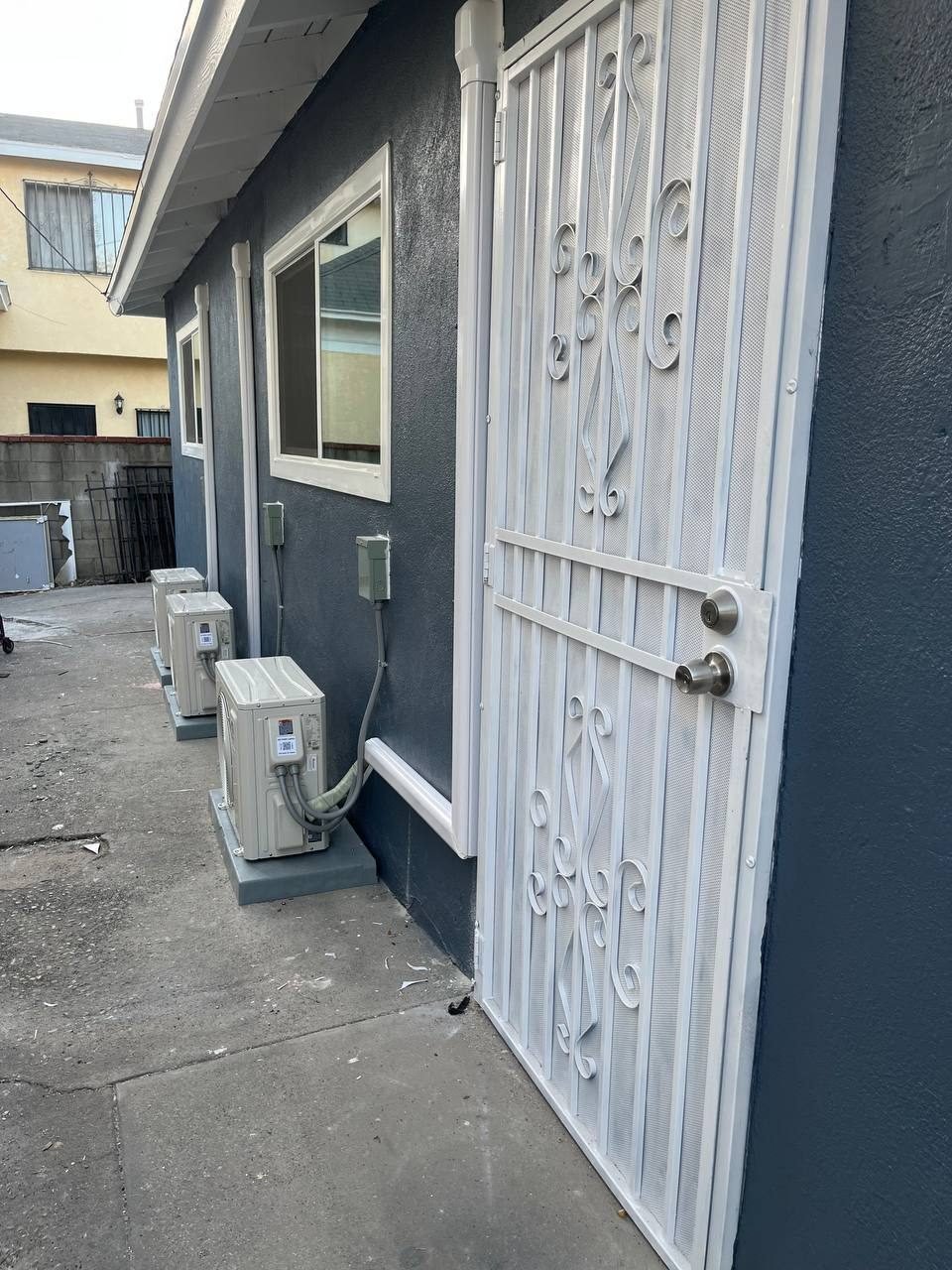
Most Arcadia homes were not built with central air. The ones that have it often have older ductwork with poor efficiency. A ductless mini-split system heats and cools individual rooms, has no duct losses, runs quieter than almost any traditional system, and can be controlled from your phone. The efficiency gains are real and measurable. California utility rates make that matter.
We install a lot of these during kitchen and bathroom remodels because once the walls are open, it’s the right moment to run the line sets cleanly. A system like a Mitsubishi or Daikin unit in a primary bedroom can change the livability of a house in a way that no $150 device ever will. If you’re doing a full kitchen renovation or a room addition, talk to us about working mini-splits into the scope. It’s almost always worth it.
Worth it. High ROI, real comfort improvement, meaningfully lowers utility bills in California. Best installed during a larger remodel when walls are accessible.
2. Smart Thermostats (Worth It, With Caveats)
If you have central HVAC that’s in good working condition, a smart thermostat is one of the few tech upgrades that consistently delivers on its promise. The Ecobee and the Google Nest are both solid. The savings estimates from the manufacturers are inflated, but the real-world energy savings are real, and the scheduling flexibility is genuinely useful for households where people’s schedules vary.
The caveat: installation is not always as simple as the box makes it look. Older SGV homes sometimes have two-wire thermostats without a C-wire, which requires either a workaround adapter or running a new wire. That’s not complicated for a contractor, but it’s a common DIY failure point. If you have a heat pump system, make sure whatever you buy is compatible before you open the box.
The other caveat: a smart thermostat on an inefficient HVAC system is like GPS on a car with bald tires. It helps you optimize a broken situation rather than fixing the underlying problem. If your system is more than 15 years old, talk to an HVAC and electrical contractor about the full picture before you buy devices.
Worth it on a functioning system with compatible wiring. Ecobee or Nest. Budget $250-$350 installed. Skip it if the underlying HVAC is the real problem.
3. Smart Door Locks (Genuinely Useful)
I’ve installed a lot of these and I like them. The Schlage Encode and the Yale Assure are both reliable. The core use case is real: keypad entry for contractors, cleaners, or family members without cutting new keys; temporary codes for guests; logs of who came and went. For homeowners who travel or have rental ADUs, a smart lock is not a luxury, it’s a practical tool.
The failure points are two: cheap smart locks with unreliable Bluetooth that drops connection, and smart locks installed in doors with poor framing or old strike plates. I’ve seen high-tech locks fail to secure a door that has a warped frame or a worn strike plate. The lock is only as good as the door it’s in. If you’re doing a remodel that touches exterior doors, that’s the time to address the door and frame first.
Worth it, especially for ADUs or homes with frequent access needs. Schlage Encode or Yale Assure. Budget $200-$350 installed. Make sure the door and frame are solid first.
4. Smart Lighting (Mixed)
This is where I start to temper expectations. Smart bulbs and smart switches work well in specific scenarios: rooms where you genuinely want color temperature control, spaces where you forget to turn lights off regularly, or a home theater setup where scene control matters. For most rooms in most homes, they’re a convenience upgrade, not a value upgrade.
The thing that frustrates me about most smart lighting installs is the ecosystem dependency. You invest in Philips Hue, then their bridge gets discontinued. You go with a Lutron Caseta system (which I actually like for its reliability), and it requires a hub and some setup. Smart light switches are generally more durable and less annoying than smart bulbs because everyone in the household can use them without downloading anything.
For new construction or a full remodel, Lutron Caseta dimmers installed during the electrical rough-in are worth the upgrade over standard dimmers. They’re reliable, well-made, and add real quality to a finished kitchen or living room. Swapping out every bulb in an existing house for smart bulbs? That I would not prioritize.
Selective yes. Lutron Caseta switches in key rooms during a remodel are a smart, durable upgrade. Replacing all your bulbs with smart bulbs as a standalone project is low-priority ROI.
5. Smart Security Systems (Depends on Your Situation)
Ring, SimpliSafe, Arlo, Nest Cam. The camera and monitoring landscape has gotten genuinely good and genuinely affordable compared to traditional alarm companies. I’m not going to pick a winner here because the right system depends on whether you want professional monitoring, how many cameras you need, and what your Wi-Fi coverage is like.
What I will say: Wi-Fi coverage in older stucco and plaster homes in the SGV can be surprisingly poor. Thick walls, multiple concrete forms, and original construction materials that were not designed for wireless signal. Before you place cameras at the perimeter of your property, check your signal strength out there. A mesh network (Eero, Google Nest WiFi) is often the best investment before any smart security hardware.
Also: cameras are not a substitute for solid physical security. A reinforced door frame, deadbolts on solid-core doors, and good lighting around entry points do more to deter break-ins than a camera that records the person who already got in. If you’re doing exterior work, talk to us about door framing, exterior lighting, and entry points while the work is open.
Worth it, but get your Wi-Fi infrastructure and physical security right first. Cameras are best positioned as a secondary layer, not the primary one.
What I Would Skip (For Now)
A few categories that get a lot of marketing attention but deliver less in practice:
Smart refrigerators and appliances. The connectivity features on high-end appliances are consistently the first thing to stop being supported. A refrigerator should last 15-20 years. The app it connects to probably won’t. Buy appliances for the appliance, not the smart features. A Wolf range is worth it for the burners and the oven. The Wi-Fi feature is a footnote.
Voice assistants as home control hubs. Amazon Echo and Google Home are useful for music, timers, and quick questions. They’re unreliable as the control center for a whole smart home setup because the integration layers break constantly and the wake-word reliability is frustrating in a busy household. Use them as what they are, not as the brain of your home.
Smart blinds and motorized shades. These are genuinely nice in a specific context: very large windows, a home theater, or an accessibility application. For most SGV bedrooms and living rooms, they’re an expensive solution to a non-problem. The motor mechanisms also require more maintenance than people expect.
The Question I Always Ask First
Before any smart home conversation, I ask: what problem are you actually trying to solve? Not “what gadget do you want,” but what is the specific friction in your daily life that you want technology to remove?
High utility bills in summer? The answer is probably mini-splits or improved insulation, not a smart thermostat alone. Worried about package theft? A video doorbell and a secure front door frame. Want to adjust the house temperature from your phone before you get home? That’s a smart thermostat use case and it genuinely works.
The best smart home upgrades solve a real problem, work reliably without constant fiddling, and use the same hardware and switches every person in the household already knows how to use. Anything that requires a specific app to do a basic function will eventually get abandoned.
If you’re planning a kitchen remodel or bathroom renovation in Arcadia or the wider SGV, I’m always happy to talk through what tech upgrades make sense to work in during the project. Electrical rough-in, dedicated circuits, HDMI or CAT6 in-wall runs, mini-split line sets, recessed lighting on Lutron dimmers. That’s the smart home work that actually adds lasting value, and the best time to do it is when the walls are already open.
For more on where to put your renovation budget, see our guide to kitchen remodeling in Arcadia or our breakdown of real bathroom remodel costs in the SGV.
繁體中文摘要 — 智慧家居升級真的值得嗎?聖蓋博谷屋主指南
身為在阿凱迪亞及聖蓋博谷從事裝修工作多年的承包商,我在許多屋主家中安裝過各式各樣的智慧家居設備。有些確實改善了居住品質,有些卻在幾個月內就被棄置不用。以下是我的誠實評估。
最值得投資的升級:
無管道迷你分體式冷暖系統(Mini-Split) — 投資報酬率最高。聖蓋博谷大多數老屋沒有中央空調,或原有管道效率低落。現代迷你分體式系統可用手機遙控、分房間調溫,加州電費偏高的環境下節能效果顯著。建議在廚房或浴室裝修時一併安裝,開牆成本最低。
智慧溫控器 — 在運作正常的中央空調系統上值得安裝。Ecobee或Google Nest均可,預算約$250-350(含安裝)。但若空調系統本身老化,應先解決根本問題,而非添置設備。
智慧門鎖 — 特別適合有ADU出租或需要頻繁讓人進出的屋主。Schlage Encode或Yale Assure是可靠選擇,預算約$200-350。確認門框結實後再安裝。
Lutron Caseta智慧調光開關 — 在裝修時一併安裝於廚房及客廳,是耐用且實用的升級,比整屋換用智慧燈泡更有價值。
建議跳過的項目:智慧冰箱及家電的連網功能(軟體支援週期遠短於電器壽命)、語音助手作為家居控制中心(整合不穩定)、智慧電動百葉窗(除非有特殊需求)。
最重要的一點:智慧設備要發揮作用,必須建立在良好的基礎設施上。老屋電路、隔熱、管道若有問題,應優先處理,再考慮智慧設備。
如需了解哪些升級最適合在您的裝修項目中一併進行,歡迎免費諮詢:(626) 244-6104。我們提供中英雙語服務。
Planning a Remodel? Let’s Talk Smart Upgrades.
The right time to add smart infrastructure is when the walls are already open. We work throughout Arcadia, Pasadena, Temple City, and the San Gabriel Valley. Free estimates, honest timelines, owner on every job. Call (626) 244-6104 or use our contact form. CSLB #1150423.