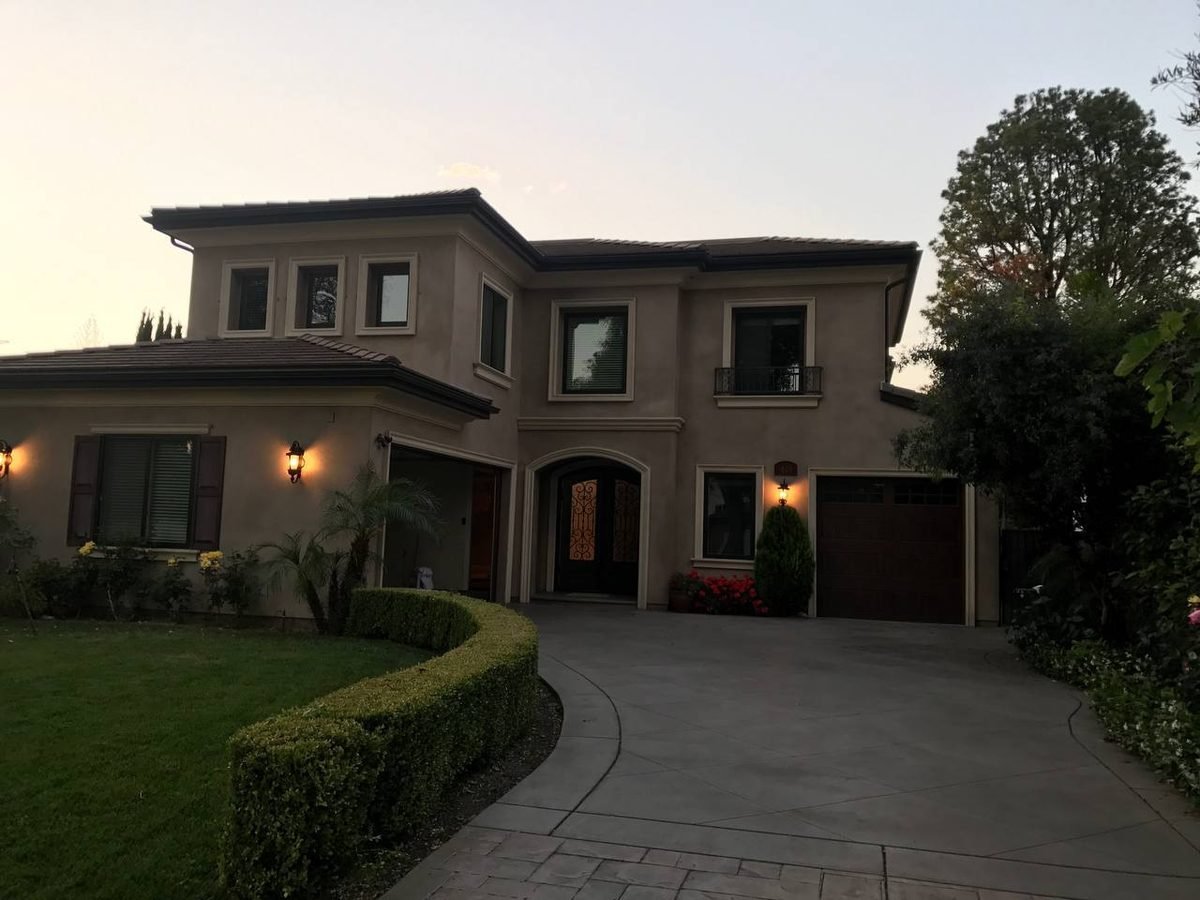
I’ve been working in Arcadia and the surrounding SGV for years now. Kitchen gut jobs, bathroom overhauls, concrete driveways, foundation work — I’ve been inside a lot of homes here. And the thing I keep noticing is how much people genuinely like where they live. That’s not universal in Southern California.
People don’t move to Arcadia to be seen. They move here — or stay here — because it’s a genuinely good place to own a home, raise a family, eat well, and get some peace and quiet without driving 45 minutes to find it. That’s worth talking about.
The Neighborhoods That Make It Real
Arcadia isn’t monolithic. The neighborhoods have real character if you know where to look.
The Santa Anita area — the streets that fan out east of the racetrack — is some of the prettiest residential real estate in the city. You’ve got mature tree canopies, wide lots, and that particular quiet that comes from a neighborhood that’s been established for 60 or 70 years. The homes here are mostly 1950s and ’60s ranch-style — single story, broad eaves, attached garages, modest footprints by today’s standards but genuinely well-built. The kind of bones contractors get excited about.
Peacock Lane is its own thing. The streets around Hugo Reid Park and the older residential grid north of Duarte Road have a different feel — smaller lots, more dense planting, a mix of Spanish-influenced stucco and classic California ranch. These blocks have been cared for by generations of homeowners and it shows. When a house comes on the market here, it tends to go fast.
The Baldwin Stocker area — the corridor running along Baldwin Avenue north of Foothill — is where you start to see newer investment alongside the older housing stock. Some of the larger lot homes here have been renovated extensively; others are waiting for their turn. For a contractor, it’s one of the more interesting parts of the city to work in because the mix of original and updated means every job is a little different.
The Community That Actually Makes the 626
You can’t talk about Arcadia without talking about the Chinese-American community. Over the past 30 years, the SGV has become one of the most significant Chinese-American communities in the country — and Arcadia sits near the center of it. The restaurants, the markets, the bilingual schools, the cultural institutions, the multigenerational households — it all adds up to something that doesn’t exist at this scale anywhere else in Southern California.
For homeowners, this matters in practical ways. The SGV has a dense network of contractors, suppliers, and tradespeople who serve Chinese-American households — many of them operating bilingually, many of them with deep relationships in specific neighborhoods. The community has high expectations for quality and a strong preference for working with people they trust. That’s shaped how the local renovation market operates, and it means homeowners here generally have good options when they need work done.
It also means the neighborhood fabric is unusually stable. Multigenerational homeownership is common in Arcadia. Families that bought in the ’80s and ’90s are now funding renovations for the next generation living in the same house. That long view changes how people think about investing in a home — which we’ll come back to.
Working in the SGV: We do bilingual consultations — English and Cantonese/Mandarin. If you’re more comfortable discussing your renovation in Chinese, we can accommodate that. Call us at (626) 244-6104.
Year-Round Outdoor Living — The Advantage Most People Take for Granted
California outdoor living is real, and Arcadia is one of the best places to enjoy it. The San Gabriel Mountains sit right there to the north — on a clear winter morning after rain, the view from a backyard in the foothills can stop you mid-coffee. The climate is mild enough that a well-designed outdoor space gets used ten or eleven months a year.
I’ve done a lot of concrete patio and outdoor hardscape work in this city, and the demand for functional outdoor spaces has grown every year. Homeowners here aren’t building showpiece yards for parties twice a year — they’re building spaces they actually use: covered patios for evening dinners, concrete flatwork for kids and grandkids, side-yard passageways that connect the front and back. The investment makes sense here in a way it doesn’t in places where you lose four months to winter.
Neighbors in Pasadena and Monrovia have the same advantage — and the Craftsman and Spanish Colonial homes in those corridors take especially well to expanded outdoor living areas. But Arcadia’s flat grid and generous lot sizes make it particularly practical to work with.
The Housing Stock: Old Bones, Good Problems
Most homes in Arcadia were built between 1945 and 1975. That’s a specific era of California construction — post-war ranch-style, mostly wood-frame with stucco, engineered for the climate with wide overhangs and single-story layouts designed to manage heat. They were built to last, and most of them have.
What that means practically is that the homes here have good bones but dated systems. Original electrical panels, galvanized plumbing, kitchens and bathrooms that were last touched in 1988. The structural work is usually solid; the cosmetic and systems work is where the investment goes.
There are also genuine Craftsman and Spanish-influenced homes scattered through the older blocks — particularly near the older commercial corridors and in the neighborhoods closest to Temple City. These homes have details worth preserving: original hardwood floors, coved ceilings, arched doorways, tile work in bathrooms that you couldn’t reproduce for any reasonable budget today. When I walk into one of these houses for an estimate, my first conversation is always about what to keep.
The challenge with this housing stock is also its advantage: because the homes are older, buyers and renters expect updates. A well-executed kitchen remodel in a 1960s Arcadia ranch home doesn’t just improve daily life — it moves the needle on value in a market where most comparable homes are still running original kitchens. The same logic applies to bathroom renovations: an updated primary bath in a home that otherwise shows its age is the most visible signal that the house has been cared for.
How Arcadia Homeowners Think About Renovation
I’ve worked in parts of LA proper — West Hollywood, Silver Lake, the Westside — and there’s a different energy to renovation there. More trend-chasing, more design-magazine thinking, more “what’s going to photograph well.” Not bad impulses, but they lead to different decisions than what I see in Arcadia.
Here, homeowners tend to think longer-term. They want the kitchen to work well for the next 20 years, not just look great for a listing. They care about materials that will hold up, layouts that function for a multigenerational household, and work that’s done correctly — with permits, with inspections, by licensed trades. They’re not trying to impress anyone. They’re investing in a home they plan to keep.
That’s a mindset I find a lot easier to work with than the alternative. It means conversations about real tradeoffs, realistic timelines, and honest budgets. We can read more about the local market dynamics in our post on what rising SGV home values mean for your renovation budget.
The Low-Key Pride of Living Somewhere Real
Arcadia isn’t trying to be Beverly Hills. It’s not trying to be anything other than what it is: a well-maintained, multi-cultural, family-oriented city with good schools, legitimate restaurants, and a built environment that’s aged better than most.
The people who live here tend to have a quiet pride in that. They’re not defensive about not being on the Westside. They know what they have. The Santa Anita Park backside on a weekday morning. The dim sum spots that have been there since before Yelp existed. The local hardware store where someone actually knows what you need. The fact that you can get from a job site in Arcadia to a job site in Monrovia or Temple City in 15 minutes.
For a contractor who lives and works here, that community stability is everything. When we do good work in a neighborhood, word travels. When we don’t, that travels too. The 626 is small enough to have real accountability and big enough to have serious demand. That’s a good combination for homeowners.
If you’re thinking about a renovation — whether it’s a kitchen, a bathroom, an outdoor space, or something more structural — we’d be glad to look at it with you. Free estimates, honest conversations, and we know this housing stock well. That’s not marketing language. It’s just true.
繁體中文摘要 — 阿凱迪亞:626為什麼是加州最值得珍惜的地方
身為在聖蓋博谷工作多年的承包商,我每天進出這一帶的老屋、翻修廚浴、鋪設車道,深刻感受到這裡的居民對自己住的地方有一種踏實的認同感——不需要向人炫耀,也不想模仿貝佛利山莊,就是知道自己有好東西。
阿凱迪亞的社區特色:聖塔安妮塔附近的街道安靜成熟,Peacock Lane 一帶的老住宅保養良好,Baldwin Stocker 走廊則有新舊並存的翻修機會。這裡的住宅多建於1945至1975年間,木框架搭配灰泥外牆,結構紮實,但廚房、浴室和管線系統普遍老舊,正是翻修投資能帶來最大回報的地方。
華人社區的影響:過去三十年,聖蓋博谷已成為全美最重要的華人聚居地之一,多代同堂的長期置業觀念,讓屋主對房屋投資更有耐心、更注重品質。這裡的屋主不追流行,他們希望廚房二十年後還好用,希望施工有許可、有驗收、有執照。
全年戶外生活:聖蓋博谷的氣候讓露台和後院一年可以使用十一個月,對混凝土庭院和室外空間的需求持續成長。翻修室外空間在這裡的投資回報特別高。
如果您正在考慮廚房翻新、浴室改建或戶外空間工程,歡迎致電免費估價:(626) 244-6104。我們提供中英雙語服務。
Thinking About a Renovation in Arcadia or the SGV?
We work throughout Arcadia, Temple City, Pasadena, Monrovia, and the broader San Gabriel Valley. Free estimates, honest timelines, owner on every job. Call (626) 244-6104 or use our contact form. CSLB #1150423.