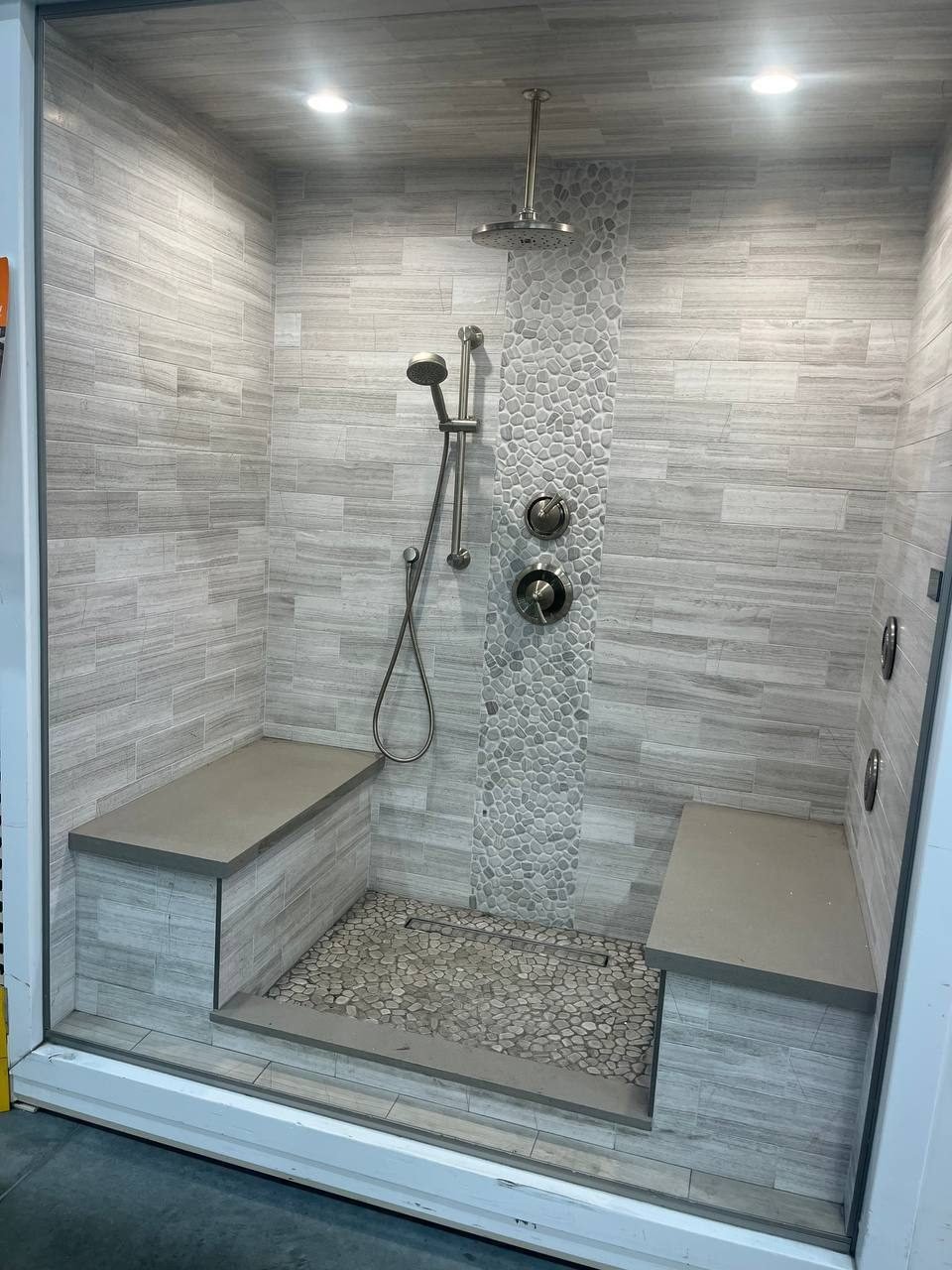
I’ve set tile in hundreds of bathrooms and kitchens across Arcadia and the San Gabriel Valley. And the most expensive mistakes I’ve seen aren’t from bad installation — they’re from homeowners picking the wrong tile for the wrong space, or chasing a trend that doesn’t hold up in real California life.
This is the guide I give clients before we start. Tile decisions should be made with eyes open: pattern, material, grout, cost, and what will still look good a decade from now.
Patterns: More Than Just Aesthetics
The layout pattern affects labor cost, material waste, and how forgiving the tile is when walls aren’t perfectly plumb — which, in most SGV homes built before 1980, they’re not.
Subway (horizontal stack or offset): The most cost-effective to install. Straight lines mean less cutting, less waste, and faster work. Classic 3×6 subway is timeless for a reason — it doesn’t call attention to itself and pairs with almost any fixture style. A 50% offset (brick pattern) hides wall imperfections well. A 33% offset (the “running bond”) is a small visual upgrade that adds almost zero labor cost.
Herringbone: One of the most requested patterns in our bathroom remodels right now. It looks custom and intentional. The honest trade-off: herringbone adds 15–25% to tile labor because each piece must be cut at a 45-degree angle, and waste runs higher. On a floor, this can add $300–$600 to a standard bathroom install. Worth it if it’s a statement space. Overkill in a laundry room.
Large format (24×24 and up): The current trend in modern kitchens and primary bathrooms. Large slabs read as luxurious and minimize grout lines, which homeowners love. The catch: large format tile requires a flatter substrate — any flex or unevenness in the floor or wall causes cracking. We often need to do more subfloor prep, which adds cost upfront but prevents failures later. On walls especially, larger tiles demand a very solid backer.
Pattern rule of thumb: Small tiles make small rooms feel busier; large tiles make them feel more open. In a 5×8 bathroom, a 4×4 mosaic floor can feel cramped. A 12×24 or 18×18 breathes more. But anything over 18×18 on a residential bathroom floor needs solid prep underneath — don’t skip that conversation with your contractor.
Materials: What You’re Actually Buying
The tile material determines durability, maintenance, and long-term cost. In California kitchens and bathrooms, not all materials perform equally.
Porcelain: The workhorse of residential tile. Dense, low-absorption, frost-resistant (matters less here, but relevant for outdoor patios), and available in every finish from matte to polished to realistic wood and stone looks. Porcelain’s moisture resistance makes it the right call for any wet area — shower walls, bathroom floors, kitchen backsplashes. It’s also harder to cut, so it costs slightly more to install than ceramic, but the durability difference is significant. For SGV kitchens that see real cooking, I recommend porcelain every time.
Ceramic: Less dense than porcelain, higher water absorption, and generally lower cost on both material and labor. Ceramic is fine in low-moisture areas — a dry bathroom wall accent, a mudroom, a dining room floor with a high-gloss finish. In a shower or as a kitchen floor, I’d push you toward porcelain. The savings on material aren’t worth the regrouting and potential moisture issues five years out.
Natural stone (marble, travertine, slate): Beautiful, unique, and high-maintenance. Marble etches if you leave lemon juice or acidic cleaner on it — a real problem in any kitchen. Travertine is porous and requires regular sealing. Slate can chip on edges. None of this means “don’t use it,” but go in informed. In a primary bathroom shower where you’re careful about cleaning products and willing to seal it annually, marble can be stunning. In a busy kitchen remodel with kids, it’s a liability. A high-quality porcelain that mimics marble gives you 90% of the look with a fraction of the maintenance.
Grout: The Detail That Makes or Breaks It
Homeowners spend weeks choosing tile and ten minutes on grout. That’s backwards. Grout covers a significant portion of the visible surface and determines how easy the installation is to maintain.
- Sanded vs. unsanded: Sanded grout is for joints wider than 1/8 inch — floors, large-format tiles, anything with a wider gap. Unsanded for thin joints (subway tile, mosaic). Using the wrong type causes cracking.
- Epoxy grout: More expensive, harder to work with, but nearly stain-proof and doesn’t need sealing. Worth considering for kitchen countertops or light-colored grout in a high-traffic bathroom floor.
- Color: Light grout shows stains; dark grout shows soap scum and mineral deposits. A mid-tone gray grout is the most forgiving for most SGV homeowners. And here’s the contractor truth: matching grout color to the tile almost always looks cleaner and more intentional than high-contrast.
- Sealing: All cement-based grout needs to be sealed after install and resealed every 1–2 years in wet areas. This is a 20-minute job with a $15 bottle of sealer. Skip it, and you’ll be regrouting within five years.
What Holds Up in California Specifically
California’s climate is gentler than most of the country, but it creates its own tile challenges. The SGV gets hot, dry summers and occasional wet winters — temperature swings that cause expansion and contraction in exterior tile installations. For outdoor patios, pool surrounds, and entry steps, always specify frost-rated porcelain with a low slip coefficient, and make sure your contractor uses flexible tile adhesive, not standard thinset, near exterior threshold transitions.
Indoor, the bigger issue is hard water. Southern California water is mineral-heavy, which means calcium deposits on grout and tile surfaces in showers. Polished tile looks beautiful day one and shows water spots within weeks. Honed or matte finishes are more forgiving. If you insist on polished marble or high-gloss porcelain in a shower, budget for a water softener or accept weekly wiping.
Common Mistakes SGV Homeowners Make
- Buying exact square footage: Always order 10–15% extra for cuts and future repairs. Tile dye lots change — you won’t be able to match it two years from now.
- Choosing tile before fixtures: Pick your fixtures first, then tile around them. It’s much easier to find tile that complements a faucet than vice versa.
- Skipping the substrate: Tile over drywall in a wet area will fail. Cement board or a waterproof membrane is non-negotiable in showers. This is where cutting corners shows up — usually right after the warranty expires.
- Mixing too many patterns: A herringbone floor, a stacked subway wall, and a mosaic accent niche can all be beautiful separately. Together in one small bathroom, it reads as chaos. Pick one statement element.
Cost Ranges in the SGV (2026)
These are honest contractor numbers, not home improvement show numbers:
- Basic ceramic tile install (labor only): $8–$12/sq ft
- Porcelain, standard layout: $12–$18/sq ft installed
- Large format (24×24+), includes additional prep: $18–$28/sq ft
- Herringbone or complex pattern: Add $4–$8/sq ft to base labor
- Natural stone with sealing: $22–$40/sq ft installed depending on material
- Full bathroom floor + shower walls (typical Arcadia bathroom): $3,500–$7,500 in materials and labor
If you’re planning a full bathroom remodel, also read our breakdown on choosing countertop materials — the same principles around durability and maintenance apply.
繁體中文摘要 — 磁磚選購指南
磁磚是裝修裡最永久的決定之一,選對了三十年不後悔,選錯了每天看都心煩。以下是我在聖蓋博谷做工程這麼多年給屋主最直接的建議:
- 拼貼方式影響工錢:地鐵磚橫貼最省工;人字拼(herringbone)好看但多花15–25%工錢;大尺寸磁磚要先整平地面,底部工程不能省。
- 磁磚材質要看用途:浴室、廚房濕區一定要用瓷質磚(porcelain)——吸水率低、耐用。陶質磚(ceramic)適合乾燥區域,省錢但不適合潮濕環境。天然大理石很美,但廚房容易被酸性物質腐蝕,要定期上蠟保養,想省事可以用仿石瓷磚取代。
- 填縫劑不要忽視:顏色選中間色調最耐髒;所有水泥基填縫劑裝好後要上密封劑,每一到兩年補一次,20分鐘搞定,省得之後重做。
- 南加州特有問題:水質硬,礦物質多,亮面磁磚容易留水漬,霧面比較好維護。戶外磁磚要用低吸水率、防滑的瓷質磚,灰縫要用彈性接著劑。
- 常見錯誤:買的量不夠(至少多買10%備用)、先選磁磚後選水龍頭(順序反了)、浴室濕區貼在普通石膏板上(一定會出問題)。
- 聖蓋博谷行情(2026年):一般瓷質磚連工帶料約每平方呎$12–$18;大尺寸或複雜拼法另計;整間浴室地板加淋浴牆大概$3,500–$7,500。
有問題或想要免費估價,歡迎來電 (626) 244-6104。我們提供中英雙語服務。
Ready to Talk Tile for Your Project?
We do this every week in Arcadia and across the SGV. Free estimates, straight answers, no pressure. Call (626) 244-6104 or use our contact form. CSLB #1150423.