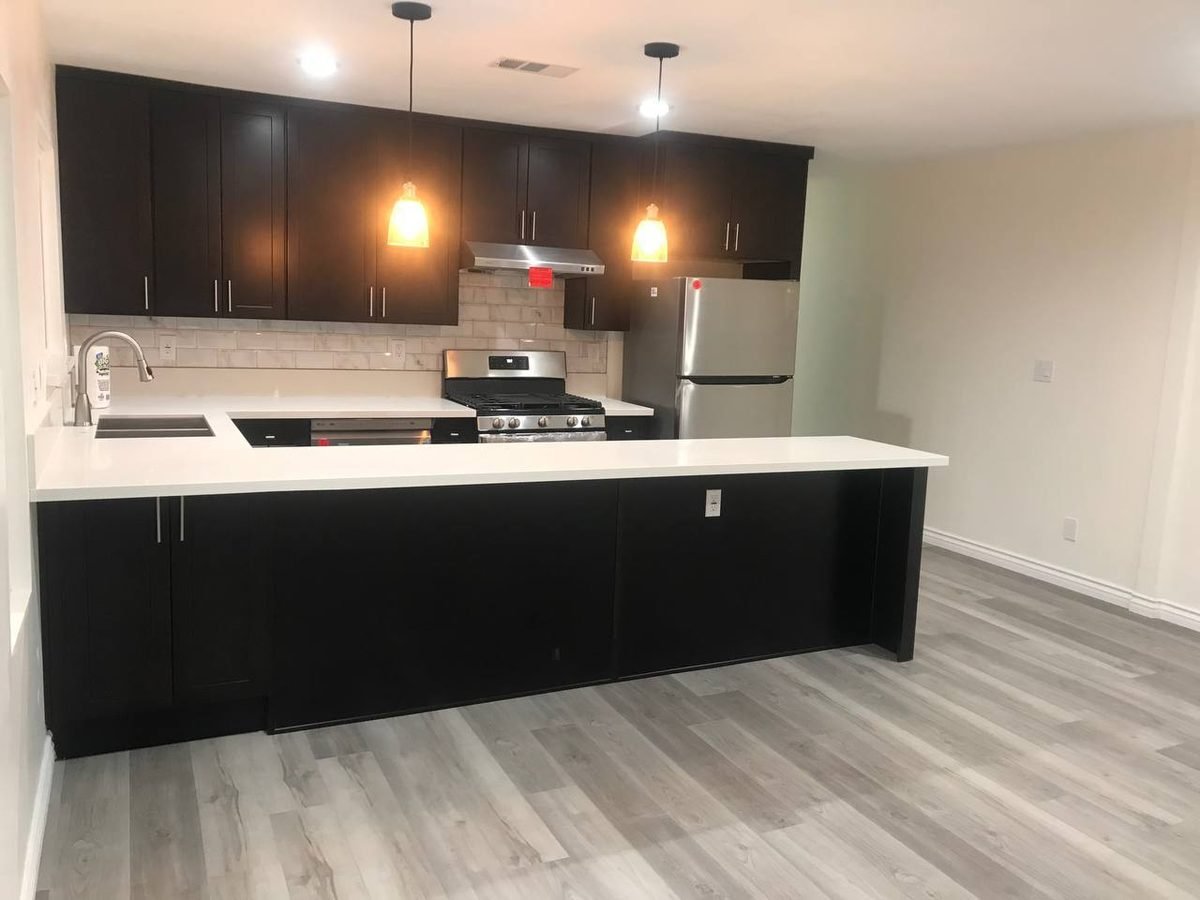
It's the most common question I get during kitchen consultations. Quartz or granite? Both look beautiful. Both hold up. But they are not the same material, and the right choice depends on how you actually use your kitchen.
After installing hundreds of countertops across Arcadia, San Marino, Temple City, and the rest of the SGV, here is my honest breakdown.
Granite is a natural stone quarried from the earth. Every slab is unique. You will never find two identical pieces of granite anywhere in the world. The veining, the color variation, the mineral deposits -- that's all natural. It is cut, polished, and installed as-is.
Quartz (also called engineered stone or by brand names like Silestone, Caesarstone, or Cambria) is manufactured. It's roughly 90-95% crushed natural quartz combined with resin binders and pigment. The result is a consistent, highly durable surface that can be made to look like natural stone -- or like nothing that exists in nature.
| Category | Quartz | Granite |
|---|---|---|
| Cost (installed) | $70 – $150 per sq ft | $60 – $130 per sq ft |
| Maintenance | None — no sealing ever | Seal every 1–2 years |
| Heat resistance | Moderate — use a trivet | High — handles hot pans better |
| Stain resistance | Excellent | Good (when sealed properly) |
| Scratch resistance | Very good | Very good |
| Look | Consistent, uniform | Unique, natural variation |
| Resale value | Strong across all buyers | Strong, especially high-end |
This is where quartz wins for most SGV homeowners. Granite is porous. It needs to be sealed when it's installed and re-sealed every one to two years after that. If you skip the sealing, red wine, soy sauce, or coffee can stain the surface. Once it's stained, it's very difficult to fix.
Quartz is non-porous. The resin binder fills all the gaps. You wipe it down with soap and water. That's it. For households with kids, frequent cooking, or anyone who just doesn't want one more thing to maintain, quartz is the easier call.
SGV kitchen reality: We see a lot of high-use kitchens in Arcadia. Multi-generational households, frequent cooking, larger families. If your kitchen is a daily workhorse, quartz holds up without the upkeep. If your kitchen is more of a showcase and you want the natural stone look, granite is worth the extra care.
Granite handles heat better. It's natural stone -- it came out of the earth at extremely high temperatures. You can set a hot pan directly on it without damage.
Quartz is more sensitive to heat. The resin in the material can discolor or crack under sustained high heat. I always recommend using a trivet or hot pad with quartz countertops. For most people this is a non-issue. But if you're someone who slides pans directly from the stove to the counter without thinking about it, granite may be the better fit.
If you want something that looks exactly how you imagine it -- same veining, same color, no surprises -- quartz gives you that control. You pick from a catalog, you know what you're getting.
Granite is different every time. You go to the slab yard, you pick your actual slab (not a sample -- the real thing), and what you see is what gets installed. That uniqueness is either exciting or nerve-wracking depending on your personality. If you love the idea of a one-of-a-kind kitchen, granite delivers that in a way no manufactured product ever will.
Both perform well. Buyers in Arcadia and San Marino recognize quality in either material. That said, I see quartz trending stronger right now in the $800K to $1.5M price range because buyers appreciate the low-maintenance story. Granite still plays well in higher-end homes where the natural stone look aligns with the overall design.
The short answer: if you're renovating to sell in the next two to three years, quartz is the safer choice for broad buyer appeal. If you're staying and you want the kitchen of your dreams, pick what you love.
For most Arcadia kitchens, I lean toward quartz. The durability is excellent, the maintenance is minimal, and the consistent look works well with the white shaker and modern cabinet styles we see most often in the SGV. Caesarstone and Silestone have options that look remarkably close to natural marble and granite -- close enough that most guests won't know the difference.
If a client specifically wants the natural stone story -- the one-of-a-kind slab, the granite's heat resistance, the character -- I'll guide them through slab selection and they end up with something truly beautiful. It just requires a little more ongoing care.
Either way, you're making a good decision. The gap between these two materials is much smaller than the internet makes it seem. What matters most is the installation. A bad install ruins any countertop. A clean, tight, properly supported install makes both look like a million dollars.
這是廚房翻修諮詢中最常見的問題:石英石還是花崗岩?兩者都耐用、美觀,但選擇取決於您的使用習慣。
石英石是人造材料,由天然石英粉末與樹脂製成,無需密封,易於清潔,非常適合經常下廚的家庭。花崗岩是天然石材,每塊紋路獨一無二,耐熱性強,但每一至兩年需要重新密封。
在聖蓋博谷,我們建議大多數屋主選擇石英石,因為維護簡單,顏色一致,適合各種廚房風格。如果您偏好天然石材的獨特美感,花崗岩也是絕佳選擇。
無論選擇哪種材料,專業安裝是關鍵。歡迎致電 (626) 244-6104 預約免費諮詢。
We install quartz and granite across Arcadia, San Marino, Temple City, and the rest of the SGV. Owner on every project. Free estimates, no pressure.
Call (626) 244-6104